

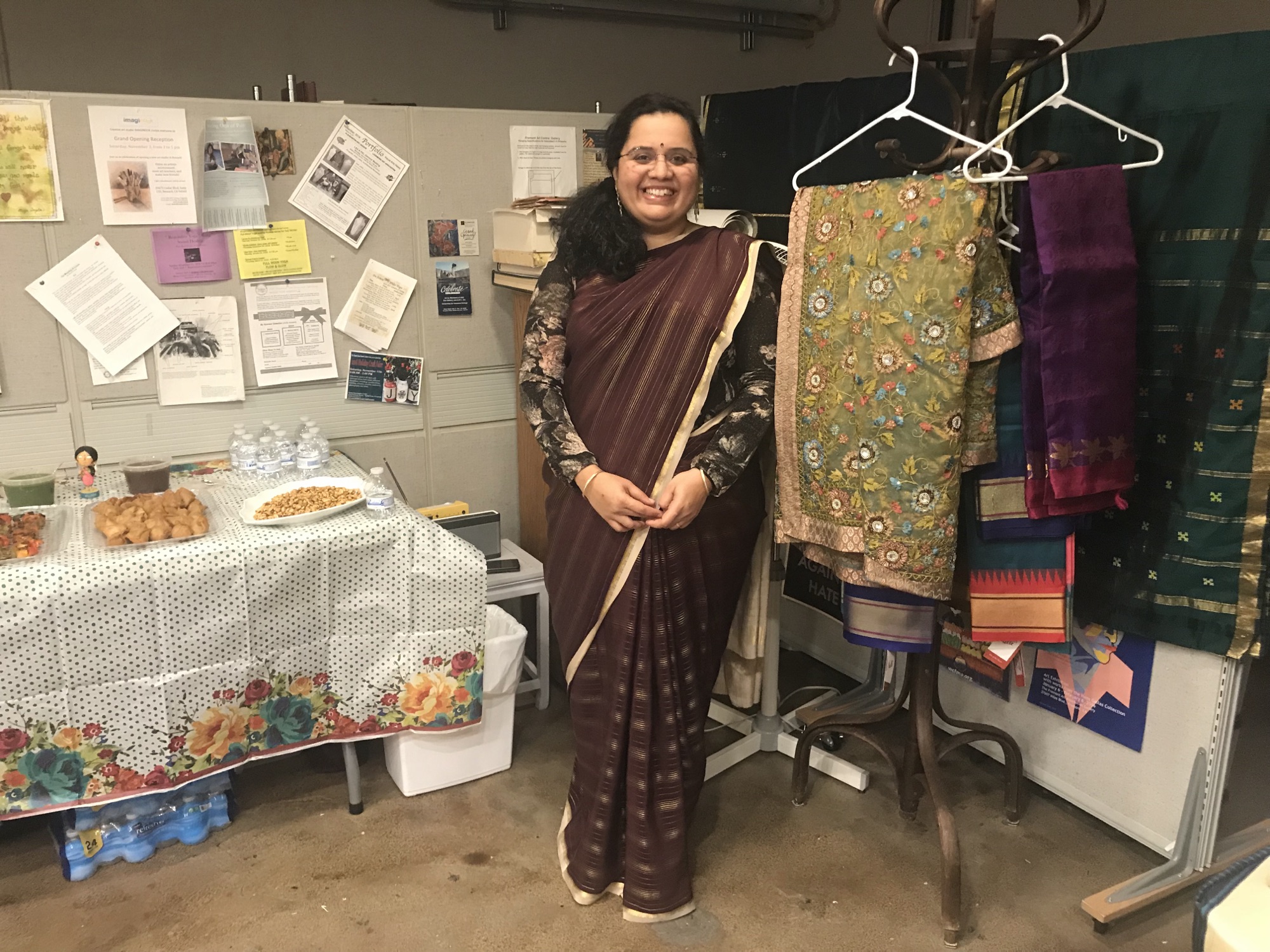
On November 3, 2018, my girlfriends and I put together a two-hour workshop for a dozen enthusiastic women. The plan: two makeup demos, two saree draping demos, and then everyone drapes their own. Not one of them had ever worn a saree in their life.
An hour in, they were handling kanjivaram silks, crepes and soft silks like pros. I was pleasantly stunned. (Project manager’s note: when your deliverable gets ahead of schedule, enjoy it quietly and don’t jinx it.)
First, a disclaimer. This was never about the perfect drape or a bridal look. I’m here to demystify the saree: understand the garment, gain the confidence to pick one up, drape it, and welcome it into our lives.
Some of what we talked about, in no particular order:
Hanging vs. folding. Some sarees are easy to hang, some are happier folded away. Know which one you own.
My love for Mysore silk. It’s a soft breeze of a drape: light, bold, stunning, classic. Not many people know or appreciate the real deal. The zari is pure, made with a bit of gold, which is why a Mysore silk can run anywhere from Rs. 25k to Rs. 75k. Mine has a subtle zari all over and is part of my wedding collection. It took me two years to find the right blouse for it. (Two years. That’s not a procurement cycle, that’s a thesis.) A fellow Instagrammer has shared videos from inside the very store in Jayanagar 4th Block, and you can see her work here.
The inner skirt question. Someone asked what its purpose is. It gives form and sets up the first layer of the saree. It doesn’t have to be a skirt: a drawstring, a pant or jeans will do. Sari Series documented the same Nivi drape without one. I wore drawstring pants under my crepe, which kept me warmer and kept the curve of my hips for the fabric to hug. I also love what Tiabhuva has done with the underskirt, a silhouette that’s perfect for curvy women. My own speculation, which I share in the video: the underskirt, pant and other first layers may be a modern version of an evolved nine-yard saree.
Playing with the pallu. I showed how the tail end can cover your head, wrap your shoulder, or create little moments of expression, much like a tail does for an animal.
Makeup in under ten minutes. My friend Gita of Mystique took the stage with steady hands and encouraged everyone to spend less than ten minutes each morning on radiant, simple results.
Notes to self:
NTS: Check the timing. I was working fast to improvise with the tail end, and it showed.
NTS: Check with the audience whether I’ve actually answered their question. Close the loop before moving on.
What a community event teaches a planner:
Four demos, a dozen participants and two hours is a small project with a real run-of-show. Timebox every segment, build in buffer, and ask for feedback while people are still in the room. Those NTS lines are my retrospective, and I’d rather write them down than repeat them. It’s the same muscle I use in planning work: define the scope, sequence the moving parts, and leave room for questions.
Come say hi at the next one! Follow me on Instagram for details, or write to me about workshops, or just to catch up over chai.
Have a wonderful Diwali, folks! Lots of love, warmth and happiness!

Leave a Reply